

by Matias F. Travieso-Diaz
The amorous rabbit kept his hold and remained where he was, but then the moment of her being conquered was come; she squatted herself as all hens do, which after having run away from the cock, consent at last to admit his caresses; she let the rabbit put himself in what position he pleased; he left his two hinder-paws on the ground, and laid his body all along the back of the hen, whose tail was removed to the left side by the pressure of the thighs of the rabbit; the hen in short became a perfect doe to him; he remained active upon her four or five times longer than a cock would have done.
Ferchault de Réaumur, Memoire, 1751
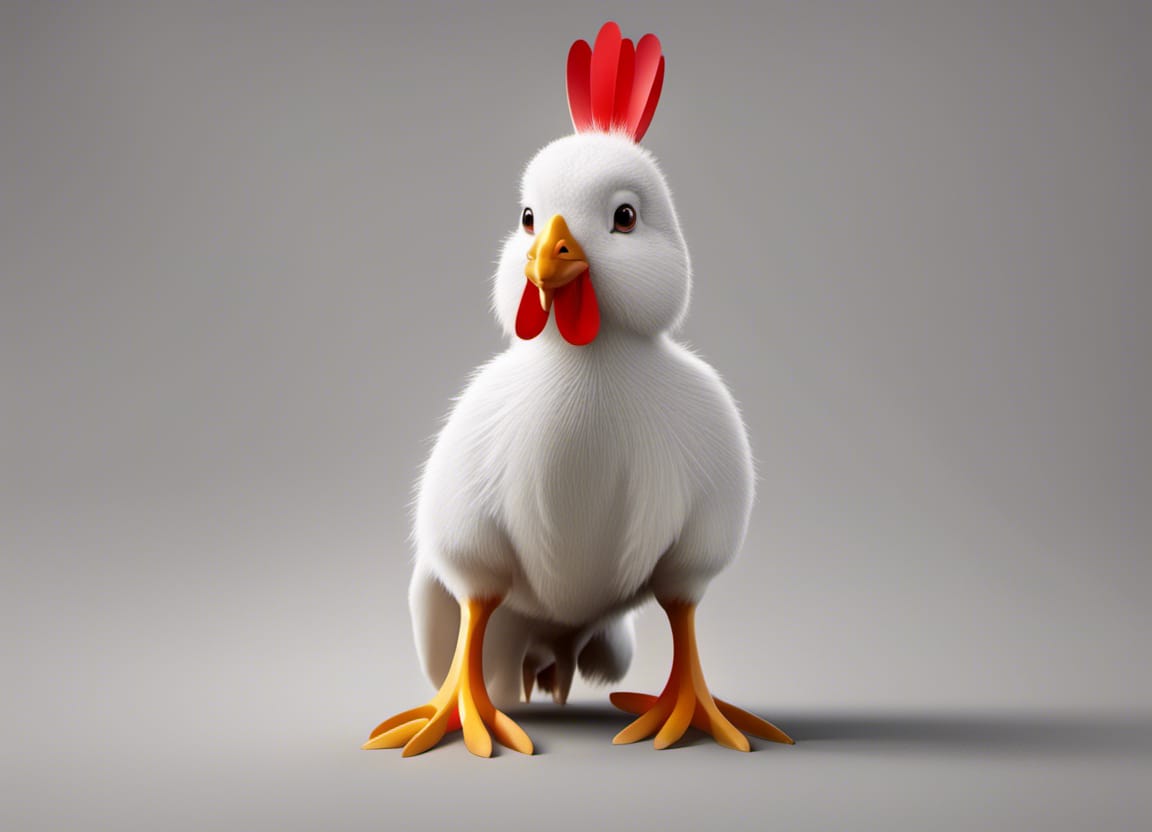
From the moment I was hatched it was clear that I was an unusual chicken. My mother was an ordinary hen, but there was nothing ordinary about me, one of many eggs she laid over several spring mornings. The down covering my body at birth soon became fur, instead of feathers. I grew long ears and whiskers. From the wings back, my body became long and devoid of any tail. My feet had four toes and were entirely covered with hair. Indeed, I could be described as a combination of a rabbit and a hen.
How I came to be like this was never known. As hens often do, my mother would sometimes stray into the woods, away from the coop and the farm’s yard, but did not reveal what adventures she pursued that might have led to my coming into the world. Needless to say, I never knew my father; he was certainly a wild buck rabbit running around in the woods. My mother named me Henrietta and, perhaps due to my dubious origins, never gave me the kind of attention she lavished on her other offspring.
In time, the physical and behavioral differences between me and other chickens became more pronounced. I was smaller than my contemporaries, but quicker to move, more active, and much, much faster on the ground. I was also more sociable and tried to become friends with other chicks, pullets, and hens in our community. Those efforts were uniformly rebuffed: most of us chickens are independent creatures that do not make friends easily. Plus, of course, I was different in many ways, and my very presence created suspicion and disdain all around me.
The most significant form of disapproval by other members of the flock was in the pecking order. I grew into an existing social structure ruled by older hens, led by a white named Gertrude (Gertie, for short) with a broad, deep body and an oblong and brick-like overall appearance. Gertie enforced a rigid procedure for eating treats and other goodies dispensed by our human owners: the roosters came first; she and the other dominant hens and their favorites followed; the less favored among us would have to settle for whatever scraps remained. I was the lowest one in that pecking order; if I got too close to those above me in the hierarchy, I would be chased away.
Another manifestation of the disaffection of the members of the flock towards me was their standoffish behavior. They co-existed with me, but never joined me (or allowed me to join them) when small groups of us gathered at feeding times or when we rested in the shade in the warm afternoons. I was also kept apart from the others when I roosted at night.
When I matured, I was largely ignored by the roosters. I mated a few times, but the males seemed put off by my strangeness and neither they nor I enjoyed our couplings very much. The eggs I laid as a result of these encounters were always sterile.
Thus, I grew up alone, often hungry and always ignored. But I chose to stay close to the flock because I enjoyed the company, such as it was, of those of my kind. Yet I became increasingly distressed. I would pluck at my fur, wander around restlessly, or lay about disinterested, often lacking energy to move. I might have perished from apathy but for the incident that changed my life.
***
One night during the warm season, I and the other chickens resting in our coop were awakened by the sound of a warning call issued by one of our roosters. The call was loud and insistent and alerted everyone to get out and run for safety.
Our coop is enclosed by wires erected all around and above the roosting area where we perch to sleep. The ground, however, is not covered by anything, and is just unimproved dirt. Some predator had dug its way under the coop and was emerging from the earth, making threatening noises and getting ready to attack us.
The coop has windows covered with screens that let in the cool night air. Alarmed, the chickens in the coop flew to the windows and burst through the screens to escape danger. The attacking beast broke through one of those windows chasing after them.
I was one of the last chickens to escape the coop and, as I reached the yard outside, I noticed that the intruder had already slain two members of the flock and was trying to seize other chickens that were running or skimming all over.
It was what humans call a fox. He was long and slender, with an orange coat, a flattened skull, upright, triangular ears, a pointed snout, and many sharp teeth. His tail was long and thick and helped him to pivot high in the air. I realized I did not have a chance of escaping him if I attempted to fly away.
I had a burst of inspiration. Instead of trying to join the rest of the flock, I planted my feet on the ground and began cackling insistently as loud as I could. My efforts to attract the predator’s attention were successful, for it turned around and faced me, so I could see him in full for the first time.
His eyes had vertically slit pupils and seemed to glow in the dark. He looked at me with great intensity and, for a moment, left me paralyzed with fear. I then shuddered and broke into running as fast as I could, away from the carnage in the yard and into the forest.
Had I been a “normal” chicken, the fox would have caught up to me in three strides or less. I was, however, part bunny and was running for my life, so I could run very fast. The fox seemed to have been surprised by my burst of speed, but almost immediately started running after me.
I had a small advantage: I knew every step of these woods, and was able to twist and turn in ways that made it difficult for the fox to follow. Nonetheless, it was only a matter of moments before the fox caught up to me.
In desperation, I jumped into a rivulet that ran behind the farm and started drifting away. The fox approached the edge of the water, getting ready to jump after me.
There was a loud noise and the fox issued a loud yelp and fell to the ground. A few steps away, a human then appeared. I immediately recognized him: he was the owner of the farm that I and the other chickens inhabited. On his right upper extremity he held a smoking black tube.
***
I let myself float away in the water for a bit, trying to quiet my fast-beating heart and seeking to regain my composure. When I finally came ashore, I realized I had landed in an unfamiliar area. I started calling out, hoping some flock members would hear me. I heard no response, which added to my distress from the close encounter with the fox.
I began walking, near the edge of the water, trying to orient myself. After a while, familiar noises began filling the night. Other members of the flock were in the vicinity, searching for me.
Sometime later, our two roosters, Gertie, and five hens came through a clearing and approached me, making all kinds of noises that I interpreted as being joyous. They escorted me back to the farm, clucking, chattering, shrieking. Gertie was the loudest among the group.
Since that memorable night, the flock has treated me with respect and attention, and I have risen higher in the pecking order. I now sit amiably in the middle of the groups that gather under the trees after eating, and am surrounded by many new friends as we roost for the night.
***
I should not have needed to perform a heroic act and put my life at risk for the benefit of the others as the price for getting their acceptance. They should have recognized that, while different, I was as legitimate a member of the flock as any other chicken. We all have good traits and bad ones, and there must be room for chickens of all types, for that will preserve our flock and make it stronger.
END
Beautiful story. Very true as it happens to many humans. Really enjoyable and easy reading. Five star rating. Recomendable for young readers.